

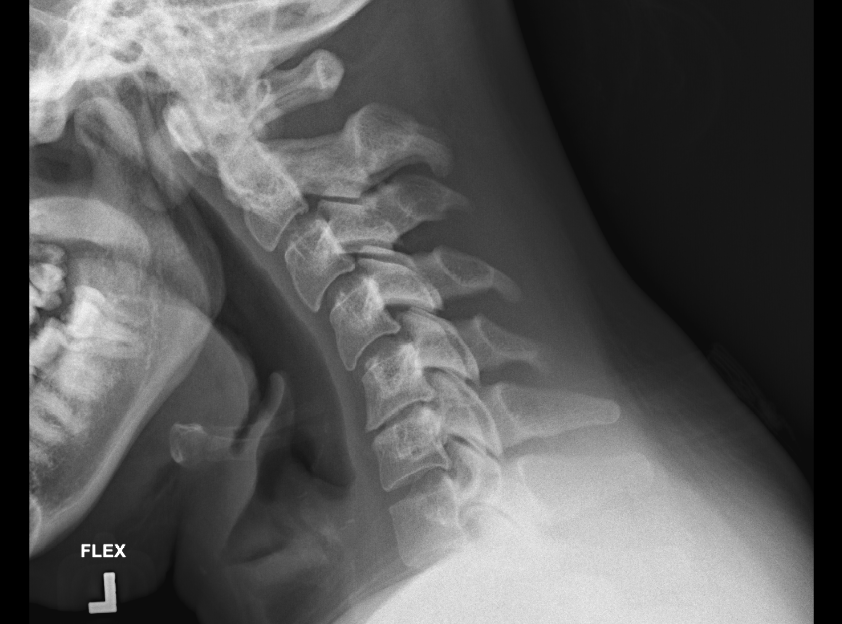
Patient Overview:
Traditional flexion-extension imaging methods are subjective and require manual measurements to assess intervertebral motion.
Clinical Challenge:
The case presented several significant challenges for accurate diagnosis:
- Limited Quantitative Data: Conventional plain film imaging studies lack quantitative spinal motion and alignment data.
- Potential for Missed Findings: Subtle instability patterns are difficult to visualize with standard radiographs.
- Subjective Interpretation: Manual assessment methods are often subjective in nature leading to the potential for inconsistent data.
Advanced Assessment Methodology:
SpineCAMP’s AI-powered measurement tools were employed to provide objective analysis of intervertebral motion across multiple cervical levels. The technology compared precise positioning between flexion and extension states, generating quantitative metrics for clinical evaluation.
Key Findings:
The SpineCAMP analysis revealed critical information about cervical spine stability:
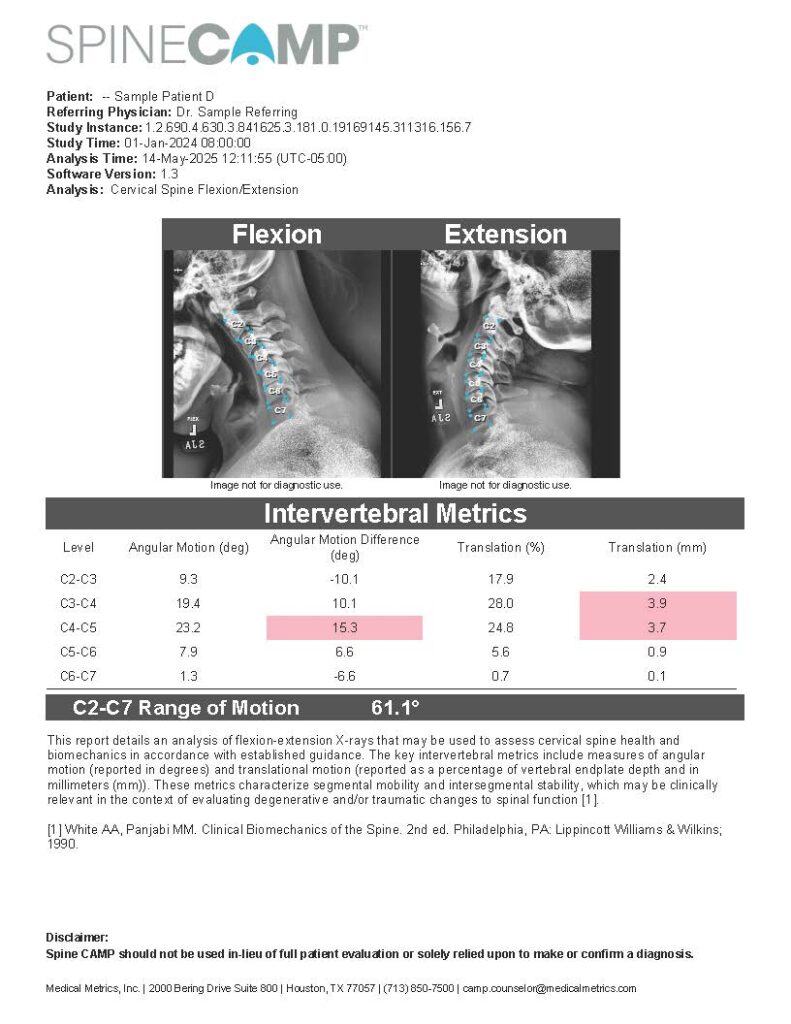
Report Summary:
Alteration of motion segment integrity (AOMSI) is defined by the AMA Guides to the Evaluation of Permanent Impairment (5th edition) according to the following criteria:
- Angular motion at the level in question that is more than 11° greater than at either adjacent level.
- Anterior-posterior translational motion of one vertebra over another that is greater than 3.5 mm.
This report details an analysis of flexion-extension X-rays that may be used to assess cervical spine health and biomechanics in accordance with established guidance.
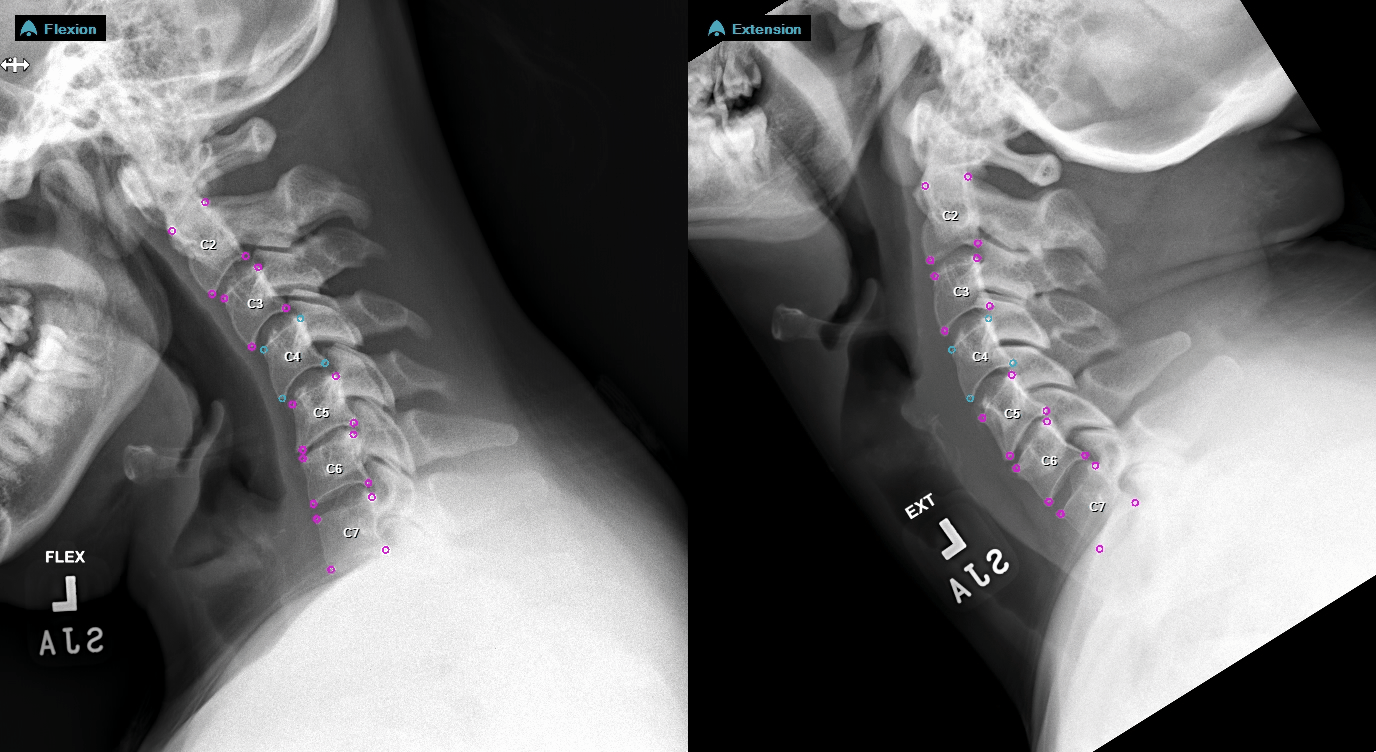
Conclusion:
This case illustrates how AI-powered image assessment technology can be used to objectively report on spinal alignment and motion patterns to provide Actionable Insights to the clinician.