

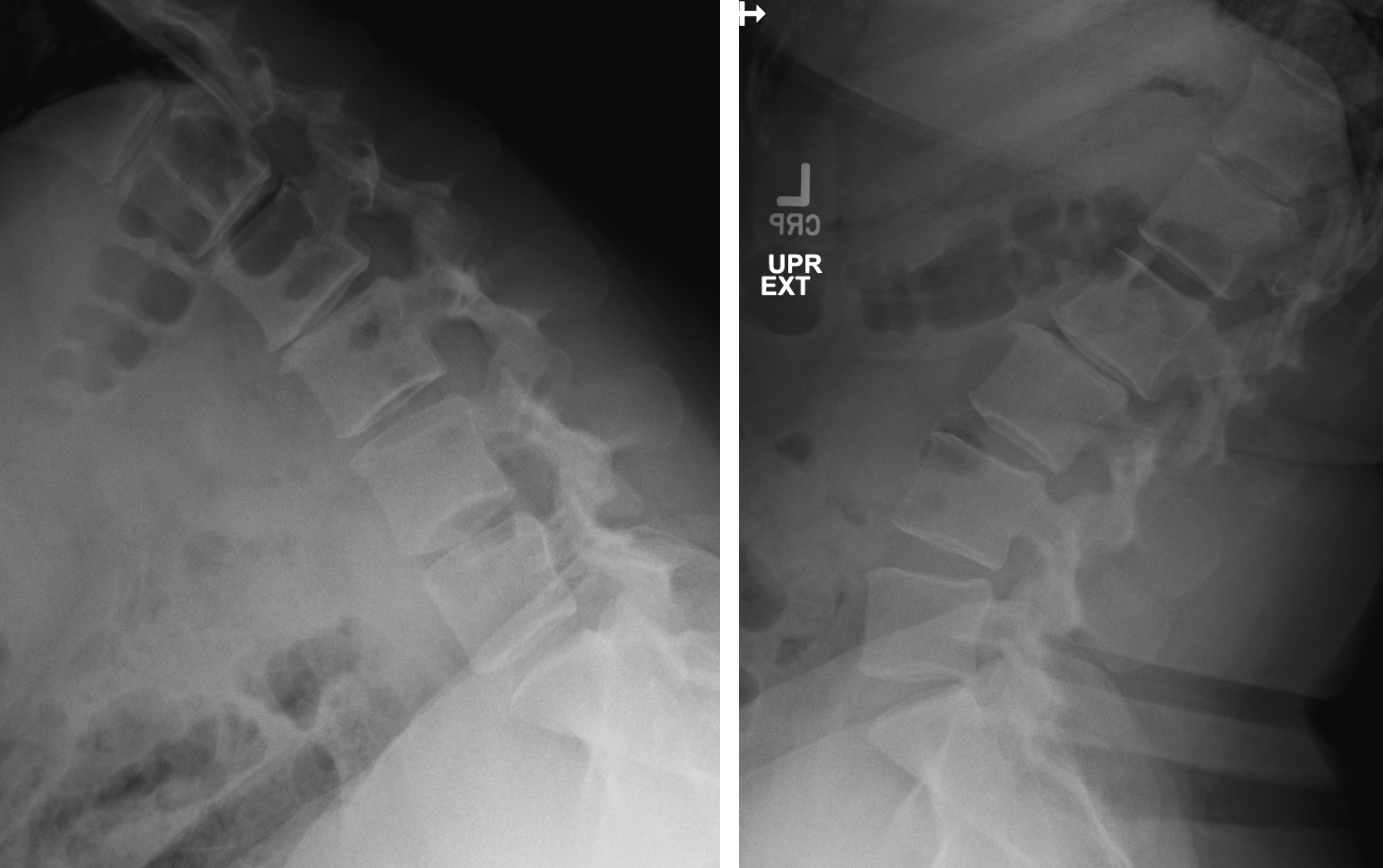
Patient Overview:
Traditional flexion-extension imaging methods are subjective and require time-consuming manual measurements to assess intervertebral motion.
Clinical Challenge:
The case presented several significant challenges for accurate diagnosis:
- Limited Quantitative Data: Conventional plain film imaging studies lack quantitative spinal motion and alignment data.
- Potential for Missed Findings: Subtle instability patterns are difficult to visualize with standard radiographs.
- Subjective Interpretation: Manual assessment methods are often subjective in nature leading to the potential for inconsistent data.
Advanced Assessment Methodology:
SpineCAMP’s AI-powered measurement tools were employed to provide objective analysis of intervertebral motion across the lumbar spine. The technology is capable of generating quantitative metrics for the treating clinician.
Key Findings:
The SpineCAMP analysis revealed critical information about lumbar spine stability:
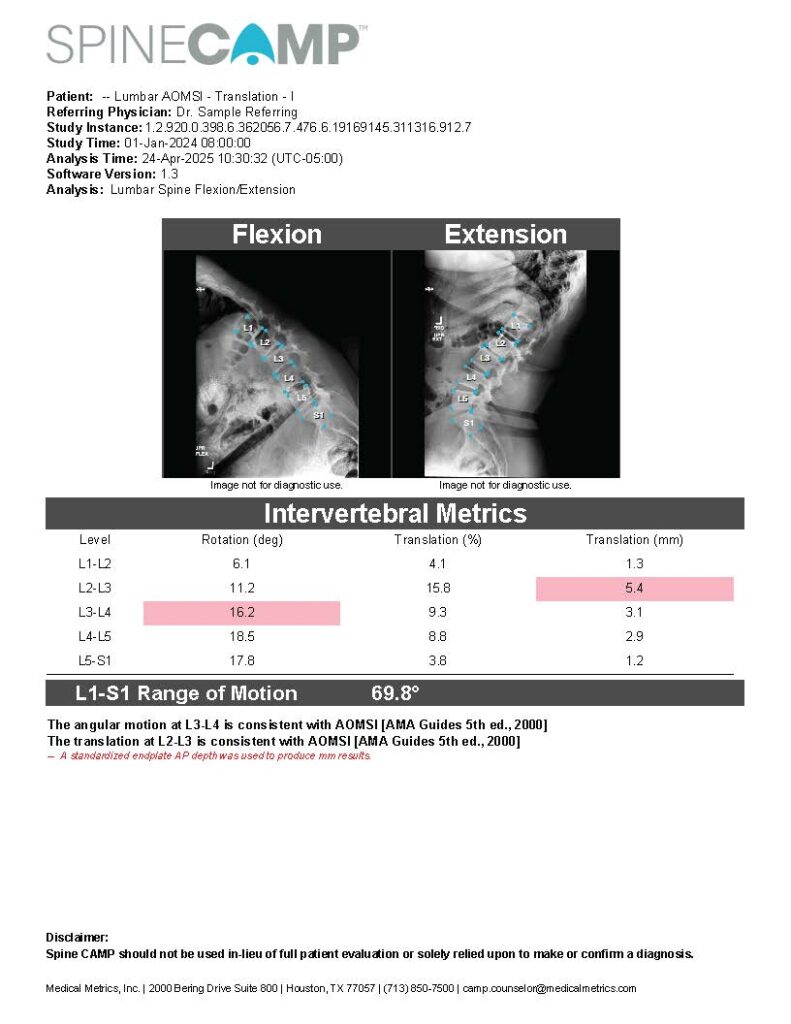
Report Summary:
Alteration of motion segment integrity (AOMSI) is defined by the AMA Guides to the Evaluation of Permanent Impairment (5th edition) according to the following criteria for the lumbar spine:
- Angular motion at the level in question is >15° at L1-2, L2-3, or L3-4, >20° at L4-5, or >25° at L5-S1. This threshold is exceeded at L3-4.
- Anterior-posterior translational motion of one vertebra over another that is greater than 4.5 mm. This threshold is exceeded at L2-3.
This report details an analysis of flexion-extension X-rays that may be used to assess lumbar spine health and biomechanics in accordance with established guidance.
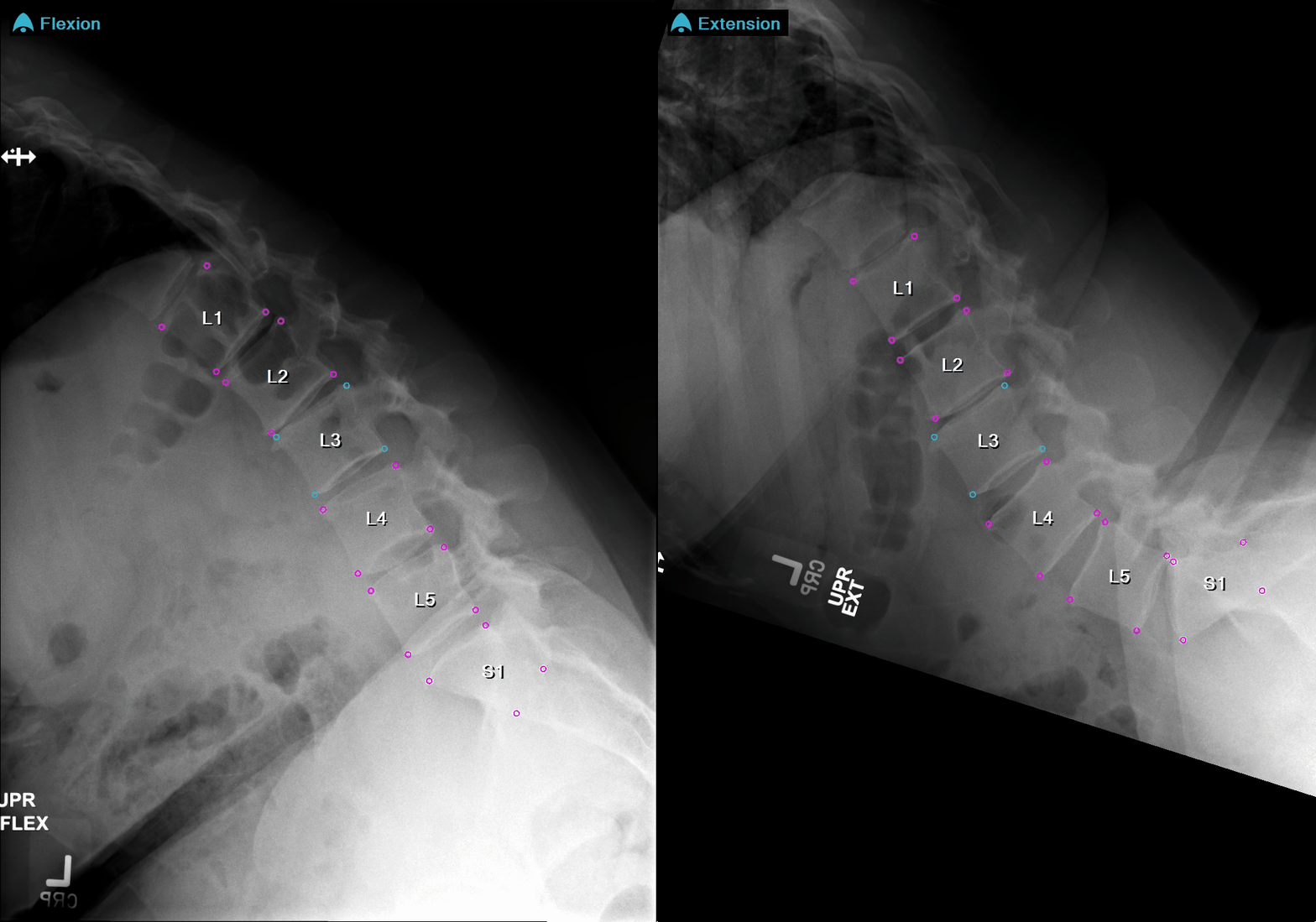
Conclusion:
This case illustrates how AI-powered image assessment technology can be used to objectively report on spinal motion patterns, and to evaluate segmental rotation and translation data according to established guidance.